
Investing in technology companies driving sustainability at scale
We partner with founders building technologies that expand what’s possible, helping the world produce more, move more, and power more while building a more abundant and sustainable future.
We invest at the intersection of the digital and physical worlds.
These technologies fundamentally improve how industries operate, not with incremental software features, but with new capabilities enabled by AI, automation, advanced hardware, and modern infrastructure.
Whether value is created through software, hardware, infrastructure, or integrated systems, we invest where technology creates durable competitive advantage.
We invest in technologies that transform industries
We invest at the intersection of the digital and physical worlds. These technologies fundamentally improve how industries operate, not with incremental software features, but with new capabilities enabled by AI, automation, advanced hardware, and modern infrastructure. Whether value is created through software, hardware, infrastructure, or integrated systems, we invest where technology creates durable competitive advantage.
Megatrends
Historically, our biggest outcomes have been tied to critical megatrends from that era. Here are three megatrends we’re excited about today:

The US Power Crunch

AI for Industrial Efficiency
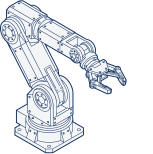
AI Driving Disruptive Automation
We invest at the commercial inflection point
G2 partners with technology companies at their inflection point, usually from Series B to pre-IPO, once product-market fit is established and the business has demonstrated meaningful commercial traction. Typically, that means millions in revenue, though milestones vary by industry. We look for proven customer demand, a repeatable go-to-market motion, and attractive unit economics.
We invest in efficiency and decarbonization
We believe the greatest investment opportunities will enable continued economic growth while decoupling that growth from energy consumption and emissions. The companies we back drive this transition through greater efficiency and decarbonization, helping create a more abundant future with lower costs, greater productivity, and fewer emissions.